Decolonizing engineering with Kear Porttris (BEng '17, MASc '21)
. Hello, everyone, and welcome back to Work It, a UVic career exploration podcast. We're now in our fourth season of speaking with UVic alumni who are making a big difference out there in their communities, and we're gathering their guidance on what they've learned along the way. I'm your host, Emma, and today, I'm enjoying my coffee and the beautiful sunshine that we have in Victoria this morning. Today, we are recording at the University of Victoria, which is located on the traditional territory of the Lekwungen, Songhees and Kosapsum peoples.
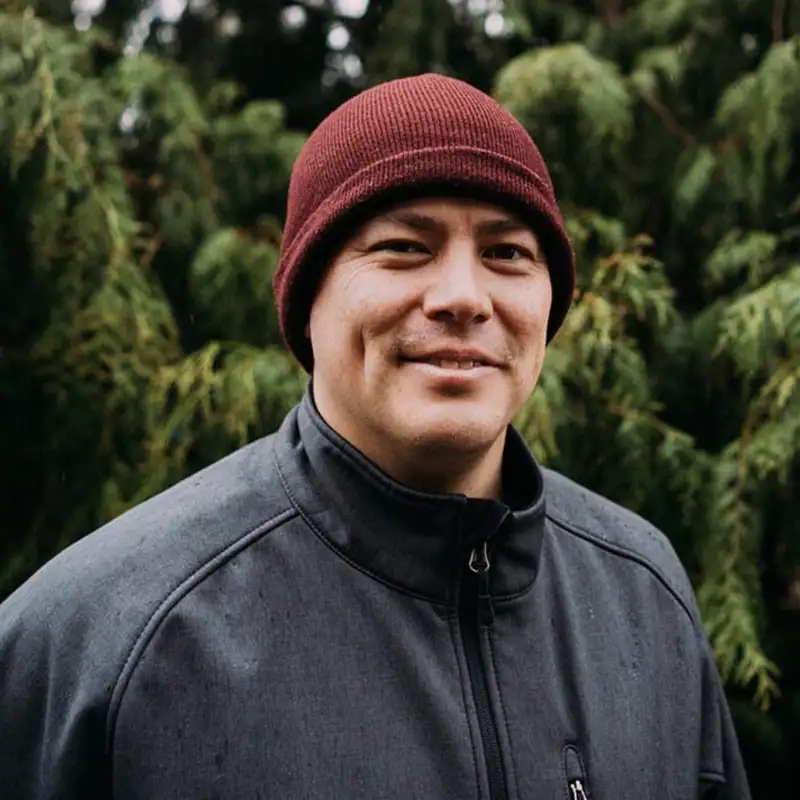
Emma Ulveland:We want to extend our gratitude for being here as uninvited guests on this land and respect the ongoing historical relationships of the Lekwungen and WSANEC peoples with this land. We're very lucky to be doing this work here today. On today's episode, I'm so excited to welcome Kear Porttris to the show. Kear completed his civil engineering degree in 2017, followed by his master of applied science in civil engineering in 2021. A child of Métis and Chinese parents, he grew up in Treaty 4 Territory in Regina, Saskatchewan and strives to help transform engineering and construction in the inclusion and engagement of Indigenous communities, peoples, and businesses.
Emma Ulveland:He is the owner of Porttris Consulting Group, a Victoria based Indigenous engagement consultancy that weaves indigenous perspectives and partnership development into projects. Kear is also an adjunct professor with UVic's civil engineering program. One of the founders and chairs of an education fund for indigenous students pursuing careers in architecture and engineering. And to top it off, he co founded the Indigenous Roots Coffee Company in 2024 with his wife, who is also a UVic alum. He was also up until recently the Director of Infrastructure with the First Nations Housing and Infrastructure Council.
Emma Ulveland:Welcome to the show, Kear. We're so happy to have you.
Kear Porttris:Thank you for having me.
Emma Ulveland:Shall we start off broadly and talk about the work that you're doing right now? What type of work do you do and what does your day look like?
Kear Porttris:So I'm an Indigenous engagement consultant, although I am wearing lots of hats. That really requires me to balance a lot of my responsibilities through the day. It might be on-site with one of my clients, might be doing community engagement, might just be reaching out to communities on the phone or going in person. A construction company might want me to support their community engagement for a project, find out what indigenous businesses are out there, try to do direct recruitment in community for jobs they might have, or to connect with indigenous nonprofits or training organizations. What I've learned in my career is phone calls, emails are not as good as just showing up.
Kear Porttris:In person stuff is hugely important. It's like reiterating the project, reiterating some opportunities, finding out about what's happening in the community, finding out how the community works. Because every community is different, they all have different supports and connections. So being able to identify how to operate in the community with the people who are there, but also how that fits in within projects is hugely important too.
Emma Ulveland:Yeah. That relationship building piece seems very critical for your role. How many projects would you be working on at the same time?
Kear Porttris:Usually, between three and six. Even six is a lot. Three is a decent number because then you're able to juggle lots. I have a lot of local connections, so it's often easier to do more local stuff because it's like, okay, I know this person. I can literally phone them and they'll pick up.
Kear Porttris:Hey, I've got this cool thing that's happening. Are you interested? Or I can make judgment calls on what I know what's happening on other projects to say, oh, how involved would they be? Or is there an economic development opportunity in this community?
Emma Ulveland:Clearly, a lot of your work is guided by your engagement with the community members that you're working with. Where does that focus come from? And why is it important to you? What drew you to this?
Kear Porttris:So I came back to school when I was in my mid twenties. I was a young dad at that time with growing family and I really wanted to be more involved in my community. Going back to school for engineering especially, I was like, I wanna do interesting work. I wanna show up every day and be like, I don't hate my job.
Emma Ulveland:Yes. That's important.
Kear Porttris:Right? I think that's one of the most important things. And how do I do that within the context of working in community and with community? We all know about or have heard about the challenges of housing on reserve. You know, there's money out there.
Kear Porttris:It just depends on where you wanna allocate your money, especially if you're the government. And so as I started to really learn more and more about on reserve housing and related infrastructure, it really turned into this is a policy problem. And really at the core of policy is people. People on both sides. Policy that impacts people and policy that guides the way that people work, I e bureaucracy.
Kear Porttris:And Yeah. And so that's really where I started to branch outside of engineering and really started to look at, okay, what does my future career look like? And it's supporting community.
Emma Ulveland:Interesting that you were able to find out very quickly that policy was maybe more where you wanted to look than where you had started your education. You did touch a little bit on your educational background, but I'd like to go back and talk a bit more about it. I wanna talk about your time at UVic when you were a student in engineering.
Kear Porttris:Yeah. So I started actually in mechanical engineering.
Emma Ulveland:Okay. Talk me through that. How did we get from mechanical engineering to civil engineering to where you are?
Kear Porttris:I moved here in 2008 with the idea that I would get into the trades because similar to now, there's a lot of opportunity in the building sector. I'll go into the trades and then I'll go into engineering. Literally, the month I moved here, the recession hit.
Emma Ulveland:Oh my word.
Kear Porttris:So I was just gonna get my feet on the ground by getting low end jobs and then see where I would get. I bartend and everyone who came in was like, oh, they just laid off my whole crew. My company just closed the doors, all these things. And so I was like, okay, what does that look like for me now? So I decided to go into engineering.
Kear Porttris:Got really interested in geothermal or geopower. It's using geothermal energy to produce electricity. Wow. It's relatively low impact. There's no greenhouse gases.
Kear Porttris:BC is the hotbed for that kind of thing. But the industry just really wasn't going anywhere. What else could I do? I started leaning towards greener buildings and that's when I started to open up that can on First Nation topics in the building industry. So I went into this period of what can I do now?
Kear Porttris:Because mechanical engineering, my heart's really not there. So civil engineering was just starting to come out. It was supposed to be the greenest civil engineering degree in Canada and I was like, perfect. And so I really geared my time in that year towards civil engineering, and then through civil engineering, really had that focus of how do I start including stuff within my degree into work with communities, expand some of those natural talents that I had in business development, being good with people into working in the in between space of engineering construction and all this other stuff that was happening.
Emma Ulveland:Well, I'm glad that you get to do that work with community that you were hoping to find way back when you were doing your education. So I'm glad that it's taken you to where you want it to be. And I'd like to talk about your consulting company, Porttris Consulting Group, and how you work with those community members. For those of us who don't know much about consulting, who don't know much about civil engineering, How do you maintain those relationships as you're going through projects? Because I'm sure there are times where you hit roadblocks or times when there are people who have different interests.
Emma Ulveland:It's probably hard to manage that.
Kear Porttris:Yeah. So coming out of school, I ended up working with a First Nations focused company that was just trying to get off the ground. They were engineering focused, so also learning in a leadership position right out of school, but I was really leaning towards doing consulting from day one. And consulting is really charging people time. You're just doing stuff that they're not necessarily able to do or want to do, and you bring your skills into that space to fill whatever their need is.
Kear Porttris:In engineering, it's design, project management, and construction. I always was sort of doing Porttris Consulting Group off the side of working with people like BC Hydro, working in the construction and engineering companies, working with First Nations Housing Infrastructure Council. Having that background has allowed me to develop in a parallel space construction and engineering and architecture in supporting design with the way that a work site or office works. And so I think that's where I've really excelled in developing my consultancy, that unique perspective that I bring to the table.
Emma Ulveland:You're bridging the gap. Do you ever have a time where you're working with one group of people and they have an idea, maybe something they wanna build, and then you're bringing the community in and they're saying, actually, I don't know that we want to do that or there's maybe a difference of opinion on how it happens. How do you help everybody see eye to eye and come to a conclusion?
Kear Porttris:That's a good question. So it's really having a lot of strategy. And I think having an openness and understanding that I'm working for the community. Mhmm. Even though I might be getting paid by this contractor, by this engineering company, even by the federal government, it's really with the idea that you're working for what's best for the community, so leaving enough wiggle room and to get ahead of stuff.
Kear Porttris:How can we address that before we get to the table with the community? Or I know this is happening in community soon or this happened. How do we incorporate that in the strategy? And it's really working on what is best for community and not putting things in stone. Communities are so busy that just getting a meeting with them can be very difficult.
Kear Porttris:You want to be prepared for that meeting because it might be the only meeting you have for months. Because if you're waiting to start for when the community gets there, it'll take so long to have all the right people at the table that I think often you'll miss the opportunity for the project. And so being able to give something to chew on and not just say, oh, yeah, it's up to you. In this one hour meeting that I've been trying to get for two months and potentially not gonna have another meeting with you for another two months, how do I make this most successful for all of us?
Emma Ulveland:Well, that's the kind thing to do too because otherwise, you're just dropping a bunch of extra work on the community that they didn't ask for, most likely.
Kear Porttris:No. And that's true. And so that's actually really insightful because it is a lot of extra work. And then you have to ask yourself who pays for that. Mhmm.
Kear Porttris:Right? Exactly. So it's one thing to say, yeah, we can do this or if they don't have the funding to back that up, if they don't have the capacity going to that partner and saying, okay, if we're asking for something from the community, what are we willing to spend? Who are we willing to pay for capacity?
Emma Ulveland:That's really interesting. Now, I think we should shift gears for a moment because now that I've learned some things about civil engineering and what it's like to work in community, there's another cool thing that you've done recently that I wanna talk about. And that's your most recent venture into the coffee business. You've started the Indigenous Roots Coffee Company. And I wanna know how did you get into the world of coffee?
Kear Porttris:Good question. I actually grew up on tea. No. Yeah. Being Chinese and Metis, they're both tea people.
Kear Porttris:So coffee wasn't big in my life. My wife on the other hand, huge into coffee. Her family is part of a coffee company. Coffee has always been there for her. I've always loved coffee crisp, coffee flavored ice cream, so I think I've always been a coffee aligned, just not coffee direct.
Kear Porttris:Both my wife and I are (ndigenous, so my wife is Haida and English, and we both work in the Indigenous space. So she's an Indigenous educator. Gifting is huge. Gifting in community is part of culture, part of protocol. And so for us, we're like, okay, what's something that we could gift and develop in a way where people would want to consume it?
Kear Porttris:We wanted something where people were like, I'm gonna use this. So that was part of it. And a big driver for Natasha, my wife, and I was around education. How can we create situations where people can have everyday acts of reconciliation within their realm of understanding an education or stance in society while also creating a product that is really nice. What is an everyday thing people do?
Kear Porttris:Coffee. And then we created partnerships to help share our stories. We're learning the business of coffee while also being able to still share on what people are doing.
Emma Ulveland:That's great. So you wear a lot of hats, you do a lot of different jobs, and you work with a lot of different types of people to do all the amazing work that you do. What qualities do you look for in the people that you work with, Or if you were gonna give advice to students who are either working towards something in your field or who are community minded, what qualities would you recommend them to work on to be successful?
Kear Porttris:For me, it's working with people who are honest and people who are genuine to themselves. Find out who you are. Find out what your values are.
Emma Ulveland:I love that.
Kear Porttris:And that's what school's for. And I've been able to pursue a values based career journey. I think when we're working within an economy that is often just hyper focused on the financial capability of stuff, I think you can often lose focus on what you're trying to do and what's best for you. And I think that being genuine, being honest with who you are, what your values are, what you want helps drive what you're doing.
Emma Ulveland:Yes.
Kear Porttris:As I'm seeing shifts in the realm that I work in, honesty is hugely important. So I've walked into open and closed deals where I'm like, I'm here to make money. That's why I'm here. I didn't fly halfway across the country, drive four hours just because I wanted to. I'm here because there's a $40,000,000 project in your backyard.
Kear Porttris:And I wanna build a relationship where I think our project and our partnership will be successful? Yes or no. If it's a no, that's okay. I won't come back.
Emma Ulveland:Everybody knows where everybody stands right from the beginning.
Kear Porttris:Yeah. And I think that's where you find alignment.
Emma Ulveland:And for students listening, I think something you could take away from this too is that skills can be taught and technical things can be taught who you are and what you value. That is intrinsic to you. So stick to that because you can always learn the skills that you need to follow those values.
Kear Porttris:Yeah. A 100%. There's a 100 other engineering companies that can do bridge design, road design, all these things. But what you bring to the table as a professional in that space is your values. And I think doctor Seuss says it best.
Kear Porttris:It's like, nobody can be youer than you.
Emma Ulveland:We need to talk a little bit about the amazing educational fund that you founded for indigenous students that are pursuing careers in architecture and engineering. Where did you get this idea, and what do you love about this initiative? What inspired you for this initiative? Tell us about it.
Kear Porttris:I wish I could say it was my idea. It was actually a project team that was put together to pursue a federal project just outside of Victoria. At the time, it was the first real stab for Indigenous inclusion in the design of a larger project. And so our team got together and developed this RFP. And as part of the RFP, there was this Indigenous participation plan requirement that we developed criteria for.
Kear Porttris:There aren't that many Indigenous people in engineering architecture. Do you know what the percentage of professionals working in engineering are who are Indigenous?
Emma Ulveland:I don't.
Kear Porttris:So it's just over 1%.
Emma Ulveland:No way. Yep. That's miniscule.
Kear Porttris:Wait till I tell you the architecture one. You know how many are architects? No. Less than a half of a person.
Emma Ulveland:Are you serious?
Kear Porttris:Yeah. And so I really saw that going through my engineering student experience where there were very few Indigenous people. Often, that also means that they've been separated from community to a certain extent, because not a lot of First Nations communities are in urban centers. And so what I've seen as a professionals working in this field is a lot of the people who are engineers are less connected to their communities and culture, which has resulted in a lot of things not designed. Right?
Kear Porttris:If you're Indigenous, you will have a different perspective on how to do those things. What happened was we're developing this Indigenous participation plan, and the most accessible way for our team to support that space was to develop a scholarship. We reached out to the SENĆOŦEN language nests, where there's some elders who are revitalized in SENĆOŦEN and their WSANEC communities, and it's really beautiful. And we reached out to that group and said, what would be a name that aligns with what we're trying to do? And they shared ḴEL,ḴELOŦEN ȻE S,ISTEW̱ a dream for what you will become, is what that phrase came out to be.
Kear Porttris:And it's not just money, but it's a mentorship program where recipients can leverage people within the group to get to where they need to be. So that was the first Indigenous participation plan that came out. That was in the early 2020s. But work to include indigenous people in business and projects is not new. So the federal government has had this procurement strategy for Aboriginal business that they established in '96 to increase access for Indigenous businesses into federal projects.
Kear Porttris:But it's largely been difficult because it's not a great tool, a lot of federal employees don't know about it, and a lot of non Indigenous companies were developing relationships with Indigenous people and or businesses and or communities, and recognize that there was still an inequality within the tools that were out there. The federal government in 2020 mandated that 5% of all federal procurement will be to Indigenous peoples. Between 2020 and about 2023, there was a policy gap. So the mandate said we need to hit 5%, but there were very few tools for people to make that happen. In that time is when the Indigenous participation plan was really starting to come out as this tool.
Kear Porttris:And now I would say Indigenous inclusion on projects across the board is completely different almost ten years later. And even the course that I teach here, I think, is super important because of the way things have evolved and because of the very real gap in education that most engineers have. Millions of dollars get spent in community on engineering projects, and the vast majority of people working on those projects are non Indigenous and actually not from community. And we're just starting to see this wave. Think my generation is setting that stage for the next generation to get there because I'm seeing way more engineers in the space, but it's gonna take decades.
Emma Ulveland:It's amazing that you've been able to help set this up, and I'm sure it will be an amazing resource for so many young people. And we will link more information about it in the show description, so please, if you're interested in learning more, go and check that out. But before we wrap up today, I wanna ask you, what is the one most essential piece of knowledge that you have with you in your work, and what is coming next for you?
Kear Porttris:Everything I do has people at the center of it. That's really the constant. Business development is all who you know. You can find a 100 companies, thousands of people who can do a certain task. Who you know becomes hugely important.
Kear Porttris:That's where I've been able to develop my career around who I know. I'll see somebody in Montreal, and then in the same week, I'll see them at First Nations Justice Council. Yeah. I just get involved. And as we enter this age of AI, who you know becomes, in my opinion, way more important.
Kear Porttris:And then what's next for me, I think that is probably more complicated. There's lots of stuff on the horizon, lots of cool opportunities. I'm often stretched thin and I'm doing stuff that I think is really important and really interesting, exploring lots, but also trying to focus more on business. The coffee is doing really well, which is great. Yeah.
Kear Porttris:Just trying to reestablish what does make sense for my businesses, for my family.
Emma Ulveland:Well, I certainly wish you the very best of luck as you go through this process. And from what I've heard from you so far, I have no doubt that you will find something that aligns with your values because that seems to be the person you are.
Kear Porttris:Thank you.
Emma Ulveland:Are you ready for some rapid fire questions?
Kear Porttris:Yes.
Emma Ulveland:This is our segment where I'm going to ask you a question and you're not even gonna think about it. The first thing that pops in your head is what's gonna come out and just have fun with this part. Okay. Did you have a favorite study spot on campus when you were doing your engineering degree?
Kear Porttris:Yes. The first people's house.
Emma Ulveland:I know you're a tea drinker from our interview today, but do you have a specific type of tea that's your favorite?
Kear Porttris:Oh, yeah. Good question. Jasmine. All day long.
Kear Porttris:And coffee, I love mochas.
Emma Ulveland:Oh, me too. Yeah. They're so good.
Kear Porttris:I love mocha any day, any time of day, it doesn't matter.
Emma Ulveland:I love that. Do you have a favorite breakfast food or a favorite breakfast spot in town?
Kear Porttris:Anything with a buffet. I'm a sucker for breakfast buffets. I love the choice. I love going back for more.
Emma Ulveland:Are you a hike in the mountains, a stroll through the forest, or a hang by the beach kind of person?
Kear Porttris:All the above. I'm from Saskatchewan, so most of that stuff is not immediately accessible.
Emma Ulveland:If you could go back in time and be a student again, is there anything you would like to do?
Kear Porttris:Yeah. I'd probably join the caving club.
Emma Ulveland:Oh, wait. Wait. What's the caving club?
Kear Porttris:So apparently, Vancouver Island has some of the best caves in the world.
Emma Ulveland:Really?
Kear Porttris:Yeah. Tons of caves up island. I wish I'd known that earlier in my student life because you just would get into a group, drive up to a cave, and then explore caves. Yeah. If you've ever been to Horn Lake Caves or anything like that, caving is probably one of the coolest, also most terrifying things to be part of.
Emma Ulveland:Oh, that is super cool. Kier, thank you so much for coming and talking to me today and for giving so much incredible advice and wisdom and talking about your experiences for all our listeners. We are so grateful that you are here, and, yeah, I just can't wait to see what happens for you in the future. So thank you for joining us.
Kear Porttris:Thank you for having me.
Emma Ulveland:Work It is developed and distributed by Co op and Career Services at the University of Victoria. It is hosted by Emma Ulveland and produced by Joy Poliquin. Today's guest was Kear Porttris, UVic civil engineering graduate and owner of Porttris Consulting Group. Our theme music and art were created by Emma Ulveland with audio editing by Emma Ulveland. To learn more about career possibilities and resources from UVic, visit uvic.ca/career-services.
Creators and Guests